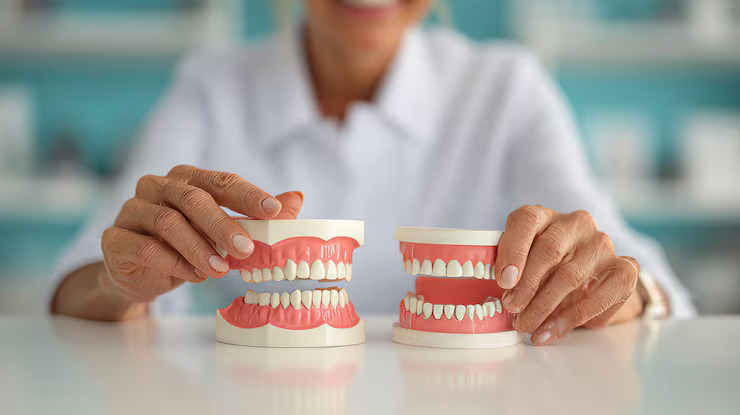
Replacing several missing teeth can make everyday activities such as eating and speaking more difficult. An implant-supported bridge can provide a more secure option than traditional removable dentures because it is held in place by dental implants. Implant-supported dentures in Buckhead may help improve stability, chewing comfort, and confidence while reducing some of the movement associated with removable dentures.
However, this option is not right for everyone. Your oral health, jawbone condition, number of missing teeth, and treatment goals all play a role in choosing the right replacement.
What Is an Implant-Supported Bridge?
An implant-supported bridge can replace several missing teeth with a row of connected artificial teeth. Dental implants placed in your jaw provide support for the bridge instead of having it sit mainly on your gums.
The implants give the replacement teeth a stable base. Unlike traditional dentures, an implant-supported bridge usually stays in place and does not need to be taken out for everyday use.
Why Choose an Implant-Supported Bridge Over Dentures?
The main difference is how the replacement teeth stay in place. Traditional dentures can move while you eat or speak, while an implant-supported bridge is anchored to implants.
Some potential benefits include:
- Greater stability: The bridge is held securely by implants.
- Easier chewing: A stable replacement may make it easier to eat a wider range of foods.
- Natural-looking appearance: The replacement teeth can be designed to blend with your smile.
- No daily adhesive: Implant-supported options do not usually depend on denture adhesive for stability.
- Support for jawbone health: Dental implants can help reduce the bone loss that may occur after tooth loss.
- Convenience: The bridge stays in place rather than needing to be removed after meals or before sleep.
How Does an Implant-Supported Bridge Compare With Traditional Dentures?
Traditional dentures sit on the gums and can be removed when needed. They can be a useful solution for replacing several or all missing teeth, but movement may occur during chewing or speaking.
An implant-supported bridge uses implants as anchors. This can give the replacement teeth more stability and may make daily activities feel more natural.
| Feature | Implant-Supported Bridge | Traditional Dentures |
|---|
| Stability | Secured to dental implants | Rests on the gums |
| Movement | Less likely to shift during normal use | May move while eating or speaking |
| Removal | Usually stays in place | Removed for cleaning |
| Chewing | Can provide a stable biting surface | May require adjustment to certain foods |
| Jawbone support | Implants help maintain bone in the treated area | Does not provide the same type of stimulation |
| Maintenance | Requires regular cleaning and dental care | Requires regular cleaning and removal |
Who May Benefit From This Treatment?
An implant-supported option may be considered when several teeth are missing and a more stable replacement is desired. A dental assessment is needed before treatment to determine whether the jawbone and surrounding tissues can support implants.
Implant-supported dentures near you may be worth discussing if you want a fixed tooth replacement and are looking for an alternative to removable dentures.
Factors that may affect your treatment plan include:
- The number and location of missing teeth
- The condition of your gums
- The amount of available jawbone
- Your overall oral health
- Your ability to maintain good daily cleaning habits
What Should You Expect Before Choosing an Implant-Supported Bridge?
Choosing a tooth replacement starts with an examination. Your dentist near you can assess your teeth, gums, jawbone, and bite before recommending an option.
You may also need dental imaging to help plan implant placement. If there is not enough bone in the area, additional treatment may sometimes be needed before implants can be placed.
The goal is to choose a solution that fits your oral health, daily needs, and long-term care routine rather than selecting an option based on appearance alone.
How Can You Care for an Implant-Supported Bridge?
Good home care helps keep your bridge, implants, gums, and natural teeth healthy.
Follow these simple steps:
- Brush your teeth twice a day with a soft toothbrush.
- Clean around and under the bridge as your dentist recommends.
- Use floss or a small tooth cleaner that works with your bridge.
- Do not bite hard objects.
- Visit your dentist for regular check-ups.
- Tell your dentist if the bridge feels loose or uncomfortable.
Regular dental visits with a dentist in Buckhead can help check your bridge, implants, and gums.
Move Forward With Greater Confidence!
Missing teeth can affect more than your smile. A stable replacement may make everyday activities such as eating and speaking feel easier while giving you a secure and comfortable solution for your dental needs. Taking the time to understand your choices can help you feel more confident about your next step.
Schedule a consultation with Smile ATL to take the next step toward restoring your smile and enjoying greater comfort in your daily life.
FAQs
Is an implant-supported bridge better than dentures?
An implant-supported bridge may feel more stable because implants hold it in place. The best option depends on your oral health, jawbone, and treatment needs.
Does an implant-supported bridge feel like natural teeth?
It may feel more stable than removable dentures. You may need some time to get used to the new bridge.
Can you eat normally with an implant-supported bridge?
A stable bridge can make chewing easier. Your dentist may suggest soft foods at first while you adjust.
How long does an implant-supported bridge last?
Its lifespan depends on your oral health, daily care, bite, and regular dental visits. Good care can help protect the bridge and implants.