Have you ever noticed a little pink in the sink after brushing your teeth? While it may seem minor, bleeding gums are not something to brush off. They can be an early warning sign of something more serious going on beneath the surface.
If you have been experiencing bleeding gums when brushing, getting gum disease treatment near you at the right time can make a big difference for your overall oral health.
Why Are Your Gums Bleeding?
Bleeding gums do not always mean a serious problem, but they are a sign that your gums need attention.
A few common reasons include:
- Brushing too hard or using a stiff-bristle toothbrush
- Inconsistent or poor flossing habits
- Hormonal changes (especially during pregnancy)
- Certain medications that thin the blood
- Plaque and tartar buildup along the gumline
If your gums bleeding when brushing is something you notice regularly, don’t ignore it — it’s usually one of the first signs that gum disease may be developing.
What Are the Early Signs of Gum Disease?
Gum disease, also known as periodontal disease, starts quietly. Many people do not even realize they have it until the condition has already progressed.
Here are theearly signs of gum disease to watch out for:
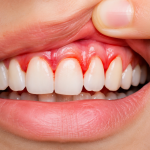
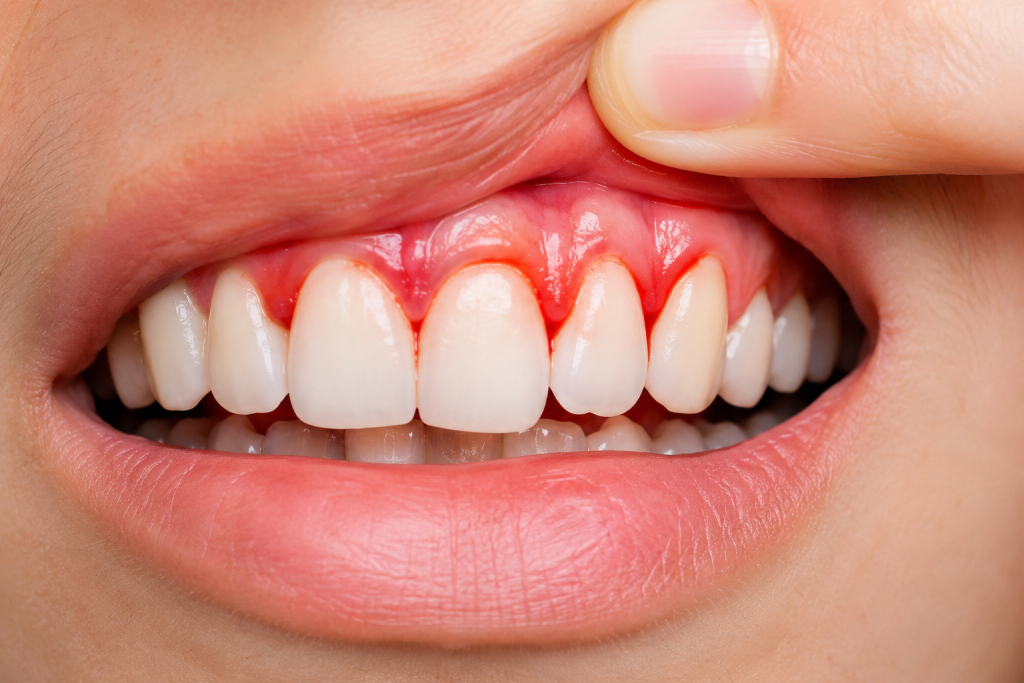
- Red or swollen gums – Healthy gums should look firm and pink, not puffy or inflamed
- Bleeding during brushing or flossing – Occasional bleeding may not seem alarming, but if it keeps happening, pay attention.
- Persistent bad breath – Bacteria in the mouth can cause an odor that does not go away even after brushing
- Receding gums – When gums start pulling away from the teeth, it can make your teeth appear longer.
- Sensitive teeth – Exposed roots due to gum recession can cause sensitivity to hot and cold temperatures
- Loose teeth – In more advanced stages, the supporting bone and tissue may weaken
Catching these gum disease symptoms early gives you the best chance of reversing damage and keeping your natural teeth.
What Is the Connection Between Bleeding Gums and Gum Disease?
When plaque, a sticky film of bacteria, is not removed properly, it builds up along and under the gumline. Over time, that buildup can cause irritation and infection of the gum tissue.
Gingivitis is the mildest form of gum disease. At this stage, you may notice your gums bleed when you brush or floss. Gingivitis is reversible with proper care and professional cleaning.
If left untreated, gingivitis can progress to periodontitis, a more severe form that damages the bone that supports your teeth. At that stage, treatment becomes more intensive — which is why early action matters.
Should You See a Dentist About Bleeding Gums?
Visiting a dentist near you as soon as you notice consistent bleeding is the smart move. A dental professional can examine your gums, measure any pockets that have formed between your gums and teeth, and determine how far along any disease may be.
Waiting does not make gum disease go away. In fact, it typically makes it worse. A professional evaluation also rules out other potential causes of gum bleeding, so you get the right diagnosis, not just a guess.
What Does Gum Disease Treatment Involve?
The right treatment depends on your specific condition and its severity. For personalized guidance, schedule a visit with a dentist in Buckhead who can assess your needs in person.
Common treatment options include:
- Professional dental cleaning (prophylaxis) – If gum disease is in the early stage, a deep cleaning is usually enough. It removes plaque and tartar from the teeth.
- Scaling and root planing – It is a deeper cleaning. It removes buildup under the gums and smooths the tooth roots so bacteria don’t stick again.
- Antibiotic therapy – Topical or oral antibiotics may be prescribed to help control bacterial infection
- Surgical treatment – In advanced cases, procedures like flap surgery or bone grafting may be necessary to restore damaged tissues.
Early action saves teeth. Patients who seek gum disease treatment in Buckhead before symptoms worsen often need far less intervention.
How Can You Prevent Gum Disease at Home?
Good at-home habits go a long way in keeping gum disease at bay. Here is what makes a real difference:
- Brush twice a day for two minutes using a soft-bristled toothbrush
- Floss at least once a day to clean between teeth and along the gumline
- Use an antibacterial mouthwash to reduce bacteria in the mouth
- Drink plenty of water throughout the day to help rinse away food particles
- Avoid smoking — tobacco use significantly increases the risk and severity of gum disease
- Keep up with professional cleanings every six months
Even if you follow all of these steps, professional checkups are essential. Some plaque hardens into tartar that only a dental tool can remove.
When Should You Stop Waiting and Make an Appointment?
There is no perfect moment — if your gums have been bleeding for more than a week or two, that is your sign to act.
You should make an appointment if:
- You notice consistent gum bleeding when brushing or flossing
- Your gums look red, puffy, or feel tender
- You have bad breath that does not go away
- Your teeth feel loose, or your bite has changed
- It has been more than six months since your last dental visit
Do not wait for pain to push you into the chair. Gum disease is often painless until it has already caused significant damage.
Book Your Gum Health Evaluation Today
If your gums have been bleeding, do not ignore the signal your body is sending you. Contact Smile ATL today to schedule a comprehensive gum health evaluation and get the care you need before the problem grows.
Can bleeding gums heal on their own?
Bleeding gums caused by gingivitis can improve with better brushing and flossing, but professional cleaning is usually needed to resolve the issue fully.
How quickly can gum disease get worse?
If left untreated, gingivitis can progress to a more serious gum disease called periodontitis within a few months, especially if brushing and flossing are not done properly.
Is gum disease treatment painful?
Most treatments are done after numbing the area with local anesthesia, so there is usually little or no pain during the procedure.
Can gum disease affect overall health?
Yes. Studies show gum disease can be linked to heart problems, diabetes complications, and other health issues in the body.