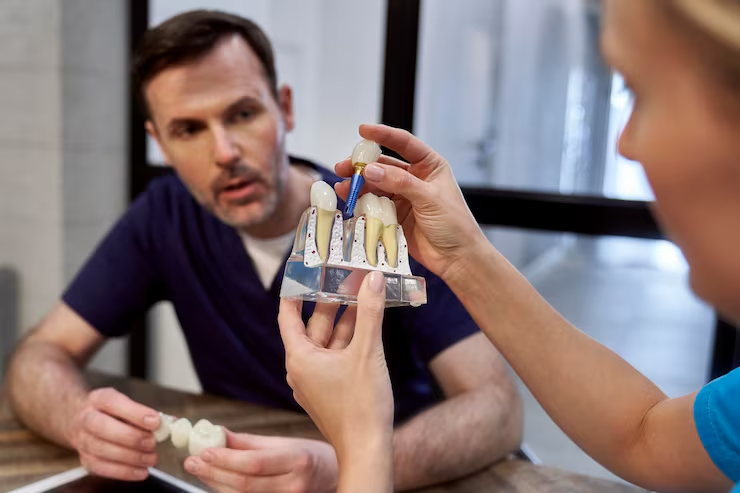
Recovery after All-on-X implants in Buckhead takes time. It includes healing, eating soft foods, and regular dental visits. During the first few days, you may have some swelling, light bleeding, and soreness. These problems usually get better as your mouth heals. Following your dentist’s instructions, eating soft foods, and keeping your mouth clean can help with healing. Recovery time is different for everyone. It depends on the number of implants, the type of new teeth, your overall health, and how well your body heals. Knowing what to expect can help you feel more prepared and take good care of your new teeth while the implants heal in your jawbone.
What Happens During the All-on-X Healing Timeline?
The All-on-X healing timeline is different for each person. Some changes occur within days, while implants need several months to integrate with the jawbone.
A general healing timeline may look like this:
- First 24–72 hours: You may have swelling, pain, and a little bleeding. Get enough rest and follow your dentist’s instructions to feel better.
- First week: Swelling and pain should start to go down. Eat the foods your dentist recommends and avoid putting too much pressure on your new teeth.
- Weeks 2–4: The gums continue healing. Chewing may become more comfortable, but hard foods may still need to be avoided.
- Following months: The implants continue joining with the jawbone. Follow-up visits help check healing and the stability of the restoration.
The timeline is a general guide, not a fixed schedule. Follow the treating dentist’s advice before changing food choices or returning to normal activities.
What to Eat After All-on-X Implant Treatment
A soft diet after All-on-X treatment helps reduce pressure on the healing areas. Even when a temporary fixed bridge is placed soon after surgery, it does not mean the implants are ready for normal chewing.
Suitable food choices may include:
- Mashed potatoes and soft cooked vegetables
- Scrambled eggs
- Smooth soups that are not too hot
- Yogurt and soft cheese
- Oatmeal or soft porridge
- Mashed bananas and other soft fruits
- Soft fish that breaks apart easily
Avoid hard, crunchy, sticky, or chewy foods during the early healing period. Nuts, popcorn, raw carrots, tough meat, and crusty bread can place too much pressure on the restoration.
Gradually return to a wider range of foods only when approved by the dental team.
How to Manage Swelling and Discomfort
Some swelling and soreness are expected after full-arch implant treatment. These symptoms may be more noticeable during the first few days, then gradually improve.
To help your mouth heal:
- Get enough rest and avoid hard exercise for the first few days.
- Take pain medicine as your dentist tells you.
- Use a cold pack on the outside of your face if your dentist suggests it.
- Do not smoke or use tobacco, as it can slow healing.
- Do not touch the treated areas with your fingers or other objects.
- Follow your dentist’s instructions for brushing and cleaning around your new teeth.
Increasing pain, worsening swelling, fever, pus, or bleeding that does not settle should be reported to the dental provider. Difficulty breathing or swallowing requires emergency medical care.
What Does Full Arch Implants Aftercare Involve?
Good full-arch implant aftercare helps protect the gums, implants, and the temporary or final bridge. Cleaning needs may differ depending on the type of restoration placed.
Important daily habits include:
- Brush gently with the recommended toothbrush.
- Clean around the bridge and gumline as instructed.
- Use a water flosser or other cleaning tools only if recommended.
- Avoid chewing hard foods until cleared by the dental team.
- Take medicines according to the prescribed instructions.
- Attend all scheduled follow-up appointments.
A dentist in Buckhead can check the healing areas, bite, bridge fit, and implant stability during follow-up visits. These checks help identify concerns before they become more serious.
Why Are Follow-Up Visits Important?
Follow-up visits are an important part of all-on-x recovery. Healing needs to be checked even when there is little pain or discomfort.
During these appointments, the dental team may:
- Examine the gums and surgical areas.
- Check for signs of infection or delayed healing.
- Review how the temporary bridge fits.
- Assess the bite and make adjustments if needed.
- Monitor the implants as they connect with the jawbone.
- Plan when it is suitable to move to the final restoration.
For people receiving all-on-x implants near you, regular visits help track progress and provide guidance about cleaning, eating, and daily care. The schedule depends on the treatment plan and healing response.
What Can Affect Recovery Time?
Recovery may take longer when certain factors affect healing. These can include:
- Smoking or tobacco use
- Poorly controlled diabetes
- Existing gum disease
- Inadequate cleaning around the implants
- Infection or other healing problems
- Excess pressure from grinding or clenching
Following instructions and attending checkups can help manage these risks. A dentist near you can also explain any necessary changes based on your individual health and healing.
A Confident Recovery Starts with the Right Care!
Successful healing after All-on-X treatment takes time, patience, and the right follow-up care. Following the recommended food plan, keeping the mouth clean, and attending regular checkups can help protect the implants as they heal. Contact Smile ATL to discuss your treatment needs, get clear guidance on each stage of recovery, and plan the next steps towards a comfortable, healthy smile.
FAQs
How long does pain last after All-on-X implant surgery?
Pain is usually stronger during the first few days and should gradually improve. If the pain gets worse or does not go away, contact your dentist for a checkup.
Can normal food be eaten with a temporary All-on-X bridge?
Not right away. A temporary bridge may look and feel like fixed teeth, but the implants still need time to heal. Follow the recommended soft-food plan until cleared to eat more solid foods.
How long does it take for All-on-X implants to heal?
The gums may take a few weeks to heal. The implants usually need a few months to join with the jawbone. Healing time is different for each person and depends on the treatment.
Is swelling normal after full-arch implant surgery?
Yes. Some swelling is normal after surgery. It may get worse during the first few days but should slowly go down. Call your dentist if the swelling gets bigger, you have a fever, or the pain gets worse.